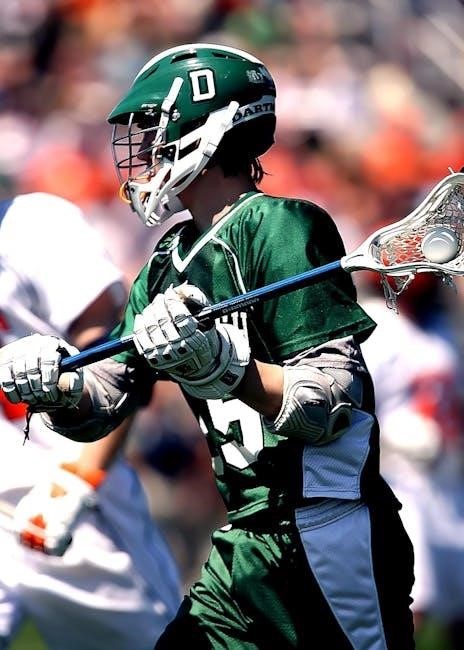
Lacrosse rules govern gameplay and equipment, ensuring fairness and safety for all participants; USA Lacrosse collaborates with NFHS and NCAA.
The National Federation of State High School Associations (NFHS) establishes, clarifies, and modifies rules nationwide, promoting consistent application across states.
Accessing official high school lacrosse rules PDFs and resources is crucial for coaches, players, and officials to stay informed about current regulations.
Overview of Governing Bodies: NFHS & USA Lacrosse
The National Federation of State High School Associations (NFHS) holds primary responsibility for establishing and maintaining the rules governing high school lacrosse across the United States. This includes annual reviews, clarifications, and modifications to ensure player safety and fair play. Access to the official NFHS rules, often available as a PDF document, is vital for coaches, officials, and players alike.
USA Lacrosse plays a crucial collaborative role, working alongside the NFHS and the NCAA in rule development and player safety initiatives. They publish youth guidebooks for various age groups, including those feeding into the high school system. USA Lacrosse resources, including PDF rulebooks and interpretations, supplement the NFHS guidelines, particularly at the youth level, bridging the gap and fostering consistent understanding of the sport’s regulations.

Importance of Updated Rules (2026 Season)
Staying current with the latest rule changes is paramount in high school lacrosse, especially with the updates for the 2026 season. The NFHS Boys Lacrosse Rules Committee recently recommended twelve rule changes, aiming to enhance player safety and improve the overall game experience. Accessing the official 2026 rules PDF and interpretation memos is crucial for all stakeholders.
These updates, like the new crease restrictions, directly impact gameplay and require thorough understanding. Ignoring these changes can lead to penalties, unfair advantages, or, more importantly, player injuries. Regularly reviewing resources from both NFHS and USA Lacrosse, including webinars and comparison charts, ensures coaches and officials are well-prepared to implement the revised regulations effectively, maintaining a fair and safe competitive environment.

Key Rule Changes for the 2026 Season
Key changes for 2026 include crease restrictions and goalkeeper protection enhancements, detailed in the 2026 NFHS rules PDF and related interpretation memos.
Crease Restrictions for Defensive Players

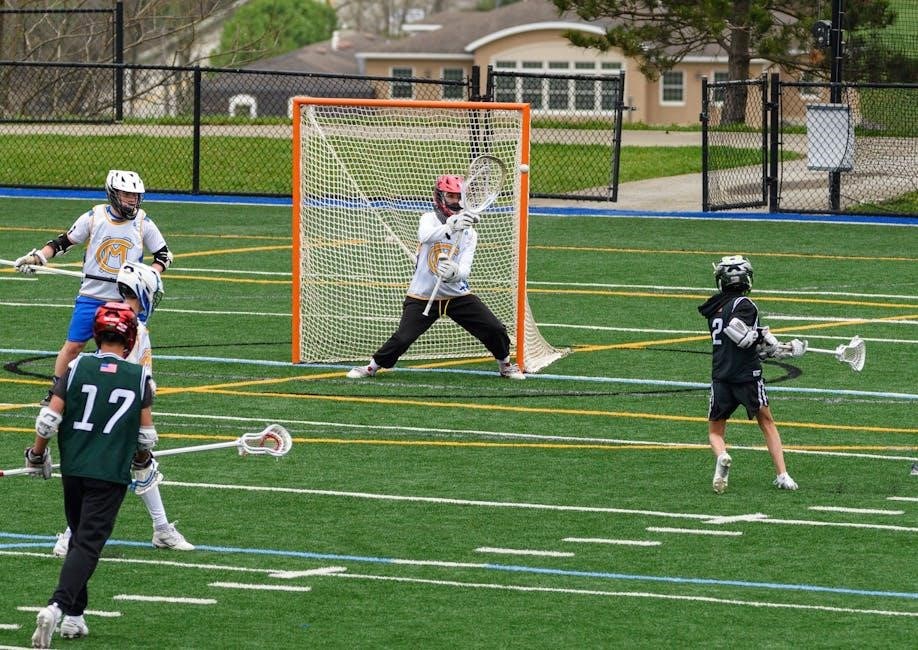
A significant rule change for the 2026 season directly addresses defensive player positioning within the goal crease. Specifically, no defensive player – excluding the appropriately equipped goalkeeper – is permitted to enter their own team’s crease with the intention of blocking a shot or functioning as a goalkeeper.
This new regulation aims to enhance offensive opportunities and prioritize player safety. Violations of this rule will result in a personal foul categorized as a non-releasable foul, meaning the offending player will be penalized, but play will not immediately stop. Detailed clarification on this rule, including interpretations regarding “perceived intent,” can be found within the 2026 NFHS Rules PDF and accompanying interpretation memos.
Officials are expected to carefully monitor crease activity and consistently enforce this rule to maintain fair play and protect attacking players.
Focus on Goalkeeper Protection
Player safety remains a paramount concern in high school lacrosse, and the 2026 rule changes reflect a heightened focus on protecting goalkeepers. The new crease restrictions, detailed in the 2026 NFHS Rules PDF, directly contribute to this goal by preventing defensive players from illegally obstructing the goalkeeper’s view or interfering with their ability to make saves.
Furthermore, officials are instructed to rigorously enforce rules regarding contact with the goalkeeper, ensuring that all players maintain a safe distance and avoid reckless challenges. The NFHS Rules Interpretation Memo (Helmet Situations) also provides guidance on appropriate goalkeeper equipment and protective measures.
These combined efforts aim to minimize the risk of injury to goalkeepers and promote a more secure playing environment.
The NFHS Boys Lacrosse Rules Committee recommended twelve significant rule changes for the 2026 season, detailed within the 2026 Boys High School Rules Interpretation PDF. A key change prohibits defensive players, excluding the goalkeeper, from entering the crease with the intent to block shots, resulting in a non-releasable foul.
Other modifications address various aspects of gameplay, including checking procedures, face-off protocols, and equipment regulations. These adjustments aim to enhance player safety, improve game flow, and clarify existing rules. Accessing the complete list of changes via the 2026 Boys NFHS Rules and Officiating Video is crucial.
Coaches and officials should thoroughly review these updates to ensure proper implementation during the upcoming season.
Essential Gameplay Rules
Essential gameplay rules, detailed in the high school lacrosse rules PDF, cover checking, offsides, and face-offs, ensuring fair and safe competition.
Checking Rules and Penalties
Checking rules are paramount for player safety in high school lacrosse, as outlined in the official rules PDF. Legal checks must be directed to the stick or arms of an opponent, with specific restrictions on body checks.
Illegal checks, including those to the head, neck, or back, result in penalties ranging from one-minute infractions to more severe penalties like ejection from the game. Understanding the nuances of legal and illegal checking is crucial for players and officials.
Penalties disrupt gameplay, granting the opposing team a man-up advantage or a penalty shot depending on the severity and location of the foul. The NFHS rules meticulously define these penalties, emphasizing responsible and controlled contact.
Officials closely monitor checking throughout the game, enforcing these rules to protect players and maintain a safe competitive environment. Referencing the rules PDF is essential for accurate interpretation.
Offsides Rule Explained
The offside rule in high school lacrosse, detailed within the official rules PDF, governs player positioning relative to the ball and the opposing goal. Essentially, a team cannot have more than six players in the offensive half of the field at any given time.
This rule aims to prevent offensive overloads and maintain a balanced playing field. A violation occurs when a team exceeds this limit, resulting in a stoppage of play and possession awarded to the opposing team.
Understanding the midfield line and how it defines the offensive and defensive halves is critical for players. The NFHS rules provide clear diagrams and explanations to aid comprehension.
Careful player counting and awareness of positioning are essential to avoid offside penalties, as outlined in the comprehensive rules PDF available from USA Lacrosse and NFHS.
Face-Off Procedures
Face-offs, meticulously detailed in the high school lacrosse rules PDF, initiate play at the start of each quarter and after each goal. Two players crouch at the center of the field, with their sticks on the ground, awaiting the official’s whistle.
The official drops the ball between the sticks, and players battle for possession. Specific rules govern foot placement, stick movement, and body positioning during the face-off, all outlined in the NFHS rules.
Illegal face-off procedures, such as lifting the stick before the whistle or entering the circle prematurely, result in penalties. The rules PDF provides clear illustrations of legal and illegal techniques.
Proper technique and adherence to the NFHS guidelines are crucial for gaining possession and maintaining a competitive advantage, as detailed in resources from USA Lacrosse.

Equipment Regulations
High school lacrosse rules PDFs detail legal equipment requirements, including helmets, pads, gloves, and mouthguards, ensuring player safety and compliance.
Legal Equipment Requirements
According to high school lacrosse rules PDFs, all players must wear a properly fitted helmet meeting NOCSAE standards, alongside a facemask securely attached. Shoulder pads are mandatory, and must allow free arm movement while providing adequate protection. Gloves are required for all field players, and goalies need specialized gloves with increased padding.
A mouthguard is a non-negotiable safety item, protecting teeth and reducing concussion risk. Protective cups are strongly recommended for male players. All equipment must be in good repair, and alterations that compromise safety are prohibited. The NFHS rules emphasize that equipment should not be used to illegally impede an opponent.
Goalies have specific equipment requirements, including a throat protector and padded pants, offering enhanced protection during gameplay. Regularly checking equipment for compliance with NFHS guidelines is vital for player safety.
Illegal Equipment Penalties (Non-Releasable Fouls)
High school lacrosse rules PDFs clearly state that illegal equipment constitutes a non-releasable foul, meaning the offending player must sit out for a specified period. A key change for the 2026 season involves defensive players entering the crease; doing so without proper goalkeeper equipment results in a non-releasable foul.
Any modification to equipment that compromises its protective function is illegal. Using an altered helmet or improperly sized padding will draw a penalty. Players using illegal pockets – those not meeting specifications for depth or sidewall construction – will also face penalties.
These fouls are considered serious as they directly impact player safety and fair play. Referees have the authority to immediately remove players with blatantly illegal equipment from the game, as outlined in the NFHS rules.
Helmet Situations and NFHS Interpretation
NFHS rules, detailed in their 2026 rules interpretation memo regarding helmet situations, emphasize proper fit and certification. Helmets must meet current NOCSAE standards and display a valid certification sticker. Any helmet deemed structurally compromised, even with a sticker, is illegal for play.
The interpretation clarifies that loose or detached face masks, or chinstraps that don’t secure the helmet properly, constitute illegal equipment. Referees are instructed to meticulously inspect helmets during pre-game checks and throughout the contest.
High school lacrosse rules PDFs highlight that players cannot alter helmets in any way that diminishes their protective capabilities. The NFHS provides guidance on acceptable modifications versus those that invalidate certification, ensuring player safety remains paramount.

Resources for Rules Information
NFHS and USA Lacrosse websites offer high school lacrosse rules PDFs, videos, and interpretation memos for coaches, players, and officials.
NFHS Boys Lacrosse Website
The NFHS Boys Lacrosse website serves as a central hub for all things related to high school lacrosse rules and officiating. It provides direct access to the 2026 NFHS Rules document in PDF format, allowing coaches, players, and officials to download and review the complete rulebook.
Beyond the core rulebook, the website features a wealth of supplementary materials, including Rules Interpretation documents, offering detailed explanations and clarifications on specific rules. These interpretations are often released as memos, such as the 2026 NFHS Rules Interpretation Memo (Helmet Situations), addressing common points of confusion.
Furthermore, the site hosts valuable resources like 2026 Boys NFHS Rules and Officiating Video content, aiding in understanding rule applications during gameplay. Access to NFHS Rule Book Info for Members is also available, providing additional insights and support for those involved in the sport. Materials from previous years, like the 2023 NFHS Rules, are also archived for reference.

USA Lacrosse Rules Resources (Boys ー 2026)
USA Lacrosse provides comprehensive rules resources specifically tailored for boys’ lacrosse, including materials for the 2026 season. These resources complement the NFHS rules, offering guidance and support for players, coaches, and officials at the youth and high school levels.
You can find the 2026 Boys Youth Rules available as a downloadable PDF, alongside a helpful 2026 Boys Youth Rules Comparison Chart (PDF), illustrating differences between rule sets. USA Lacrosse also offers 2026 Boys NFHS Rules and Officiating Video content to enhance understanding.
Furthermore, USA Lacrosse hosts 2026 Rules Interpretation Live Webinars, providing interactive learning opportunities. A Boys High School Lacrosse Rules Poster offers a quick reference guide, and the Boys Youth Rule Book provides a detailed overview of the game’s regulations.
Accessing PDF Rulebooks and Interpretation Memos
Several resources provide access to official high school lacrosse rules in PDF format. The NFHS Boys Lacrosse website hosts the 2023 NFHS Rules, alongside follow-up rules memos offering clarifications and edits; Members can access the complete NFHS Rule Book Info as a PDF.
For the 2026 season, look for the 2026 Boys High School Rules Interpretation (PDF) and the 2026 NFHS Rules Interpretation Memo (Helmet Situations). Previous years’ materials, like the 2025 Boys Youth Rules Presentation (PDF) and the 2025 NFHS vs Collegiate Rules Comparison Chart (PDF), are also valuable.
USA Lacrosse provides direct links to these PDF documents, ensuring easy access for all involved in the sport. Regularly checking these resources is vital for staying current with rule changes and interpretations.

Understanding Rule Comparisons
NFHS rules differ from collegiate regulations, and boys youth rules vary; comparison charts (PDF format) highlight these distinctions for clarity.
NFHS vs. Collegiate Rules
Navigating the differences between National Federation of State High School Associations (NFHS) and collegiate lacrosse rules is essential for players transitioning between levels. While both aim for a fast-paced and skillful game, key distinctions exist in areas like checking, offsides, and face-off procedures.
Collegiate rules generally permit a more physical style of play, with broader allowances for body checking compared to the stricter limitations imposed by NFHS regulations at the high school level. Offsides interpretations also differ, impacting offensive strategies.
Accessing the 2025 NFHS vs. Collegiate Rules Comparison Chart (PDF) provides a detailed side-by-side analysis of these variances. Understanding these nuances is crucial for coaches preparing players for collegiate competition and for officials ensuring consistent rule enforcement across different levels of play. These resources are available through USA Lacrosse and NFHS websites.
Boys Youth Rules Comparison Charts
Understanding the evolution of lacrosse rules as players progress through youth levels is vital. Rules are often modified to prioritize skill development and safety at younger ages, gradually increasing complexity and physicality as players mature. Boys Youth Rules Comparison Charts (PDF) offer a clear overview of these changes.
These charts detail differences in rules concerning checking, field dimensions, game length, and equipment requirements across various age groups (e.g., 14U and under). They highlight how rules adapt to accommodate the physical and cognitive abilities of young athletes.
The 2026 Boys Youth Rules (PDF) and comparison charts are essential resources for coaches, parents, and league administrators. Accessing these documents ensures consistent rule application and a positive playing experience for all participants, fostering a love for the game while prioritizing player safety and development.