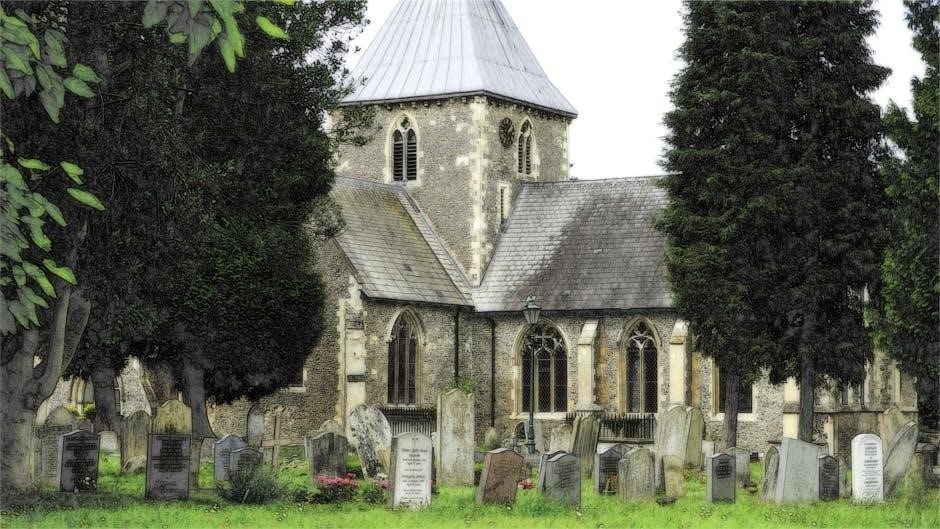
“Do Not Stand at My Grave and Weep” is a profoundly moving poem offering solace and a unique perspective on grief, death, and remembrance.
Initially penned as a response to a mother’s loss, the poem quickly transcended its personal origins, becoming a widely cherished source of comfort.
Its enduring appeal stems from its simple yet powerful message: physical death is not an end, but a transformation into something eternal and ever-present.
The poem’s accessibility and hopeful tone have led to its frequent inclusion in memorial services and its widespread circulation, often sought in PDF format.
Historical Context and Origins
“Do Not Stand at My Grave and Weep” emerged from a deeply personal moment in 1932, crafted by Mary Elizabeth Frye in response to a friend’s grief over the loss of her mother. Frye wasn’t initially intending to create a universally resonant poem; rather, she penned it on a scrap of paper as a comforting message for a grieving friend. The friend had expressed sadness about not being able to visit her mother’s grave, prompting Frye’s evocative verses.
Interestingly, Frye didn’t consider herself a poet, and the poem wasn’t published for many years. It circulated primarily through personal copies and word of mouth, gaining traction within communities touched by loss. The poem’s initial spread wasn’t driven by formal publication, but by its inherent emotional power and the desire to share its message of hope.
The poem’s enduring popularity has led to numerous requests for a readily accessible PDF version, allowing for easy sharing and preservation of this comforting work.
Mary Elizabeth Frye: The Author’s Story
Mary Elizabeth Frye (1905-2004) was an American poet, though she didn’t identify as one during her lifetime. Born in Ohio, she worked various jobs, including a radio script writer and a sales clerk, but poetry was always a personal outlet. Frye’s life was marked by a quiet dedication to family and a deep empathy for others, qualities reflected in her most famous work.
She never sought fame or recognition for “Do Not Stand at My Grave and Weep,” and was surprised by its widespread adoption. Frye remained humble about her poetic talent, viewing the poem as a simple expression of comfort rather than a literary masterpiece. Despite its immense popularity, she never copyrighted the work, wishing it to be freely available to all who needed it.

Today, many seek a PDF copy to share this comforting message, honoring Frye’s intention of open access.
The Poem’s Initial Reception and Spread
“Do Not Stand at My Grave and Weep” began as a response to the grief of Martha Henderson, whose son Michael was killed in action during World War II. Frye penned the poem in 1973, initially titled “When I Have Died,” offering Henderson a message of enduring connection beyond physical death. The poem resonated deeply with Henderson, who shared it widely with friends and family.
Its spread was largely organic, fueled by word-of-mouth and the poem’s inherent comfort. It quickly gained traction within bereavement circles and began appearing in memorial services and sympathy cards. The poem’s accessibility and universal themes contributed to its rapid dissemination, even before the advent of widespread internet access.
Now, a PDF version is easily shared, continuing its journey of offering solace.

Analyzing the Poem’s Core Themes
“Do Not Stand at My Grave and Weep” explores themes of immortality, remembrance, and the cyclical nature of life, often found in a PDF format.
Immortality and the Continuation of Spirit
“Do Not Stand at My Grave and Weep” powerfully conveys the idea that death is not an absolute ending, but rather a transition into a different form of existence. The poem rejects the conventional notion of grief centered around a physical grave, instead suggesting the departed spirit lives on, interwoven with the natural world.
Frye’s verses present the deceased as becoming one with elements like the wind, snow, sunlight, and rain – forces that are perpetual and ever-present. This imagery implies a continued presence, not as a static entity, but as an active, dynamic force within the universe.

The poem’s message, frequently accessed in PDF versions for memorial services, offers comfort by suggesting that the essence of a loved one isn’t extinguished, but transformed and integrated into the ongoing cycle of life. This perspective shifts the focus from loss to a celebration of enduring spirit.
Memory and Remembrance as a Form of Presence
“Do Not Stand at My Grave and Weep” subtly emphasizes that the deceased continue to exist within the memories and hearts of those who loved them. The poem doesn’t advocate for forgetting, but rather for recognizing a different kind of presence – one sustained through remembrance and connection.
The act of recalling a loved one, experiencing the warmth of sunlight or the rush of wind, becomes a way of encountering their enduring spirit. This perspective transforms grief into a celebration of a life lived and a love that transcends physical absence.
Many seek solace in the poem, often finding it readily available as a PDF for sharing at memorials. It suggests that as long as we remember, the departed are never truly gone, but live on within our experiences and affections.
Nature as a Symbol of Enduring Life
“Do Not Stand at My Grave and Weep” masterfully employs imagery of the natural world to illustrate the cyclical nature of life and the continuation of spirit. The poem equates the departed with elements like wind, snow, sunlight, and rain – forces that are constantly renewing and transforming.
This connection suggests that death isn’t an ending, but a return to the fundamental energies of the universe. The speaker isn’t gone, but rather integrated into the ongoing processes of nature, present in every gentle breeze and sparkling snowflake.

The poem’s comforting message is widely shared, often accessed as a PDF for use in memorial services. It offers a beautiful and hopeful vision of immortality, rooted in the enduring rhythms of the natural world.

Detailed Examination of Poetic Devices
“Do Not Stand at My Grave and Weep” utilizes impactful repetition, vivid metaphors, and sensory details, readily available in PDF versions, to convey its message.
Metaphor and Imagery in the Poem
“Do Not Stand at My Grave and Weep” masterfully employs metaphor and imagery to illustrate the poem’s central theme of continued existence beyond physical death, easily accessible within a PDF copy.
The speaker doesn’t claim to be these elements of nature, but rather is expressed as them – a thousand winds, diamond glints on snow, sunlight, and rain. This isn’t literal; it’s a powerful metaphorical assertion of a transformed spirit.
These images aren’t randomly chosen. Wind symbolizes freedom and pervasiveness, snow represents purity and resilience, sunlight embodies life and warmth, and rain signifies renewal and nourishment.
The poem’s imagery appeals to multiple senses, creating a deeply felt experience for the reader. The “swift uplifting rush” of birds and the “soft stars” evoke auditory and visual sensations, reinforcing the idea of an ongoing, vibrant presence.
The consistent use of natural imagery underscores the cyclical nature of life and death, suggesting a seamless transition rather than a definitive end.
Repetition and its Impact on Meaning
The strategic use of repetition in “Do Not Stand at My Grave and Weep” significantly amplifies the poem’s core message, readily apparent when examining a PDF version of the text. The opening lines, “Do not stand at my grave and weep, I am not there. I do not sleep,” are repeated almost verbatim towards the poem’s conclusion.
This repetition isn’t merely stylistic; it functions as a powerful reassurance and a firm declaration of continued existence. It reinforces the central idea that grief should not focus on a place of finality – the grave – but on the enduring presence of the spirit.
The echoing phrases create a sense of circularity, mirroring the cyclical nature of life and death.
By repeating the denial of death (“I did not die”), the poem actively challenges conventional notions of loss and offers a hopeful alternative perspective. This deliberate repetition solidifies the poem’s comforting and uplifting tone.
The Use of Sensory Details (Wind, Snow, Sunlight)
Frye masterfully employs vivid sensory details – wind, snow, and sunlight – to illustrate the poem’s central theme of transformation and enduring presence, easily observed when reading a PDF copy. These aren’t simply descriptions of nature; they are embodiments of the speaker’s continued existence.
The “thousand winds that blow” evoke a sense of boundless freedom and pervasiveness, suggesting the spirit is not confined. “Diamond glints on snow” offer a visual sparkle, representing joy and beauty even in stillness.
Similarly, “sunlight on ripened grain” symbolizes warmth, growth, and abundance, linking the departed to the natural cycle of life.
These concrete images ground the abstract concept of immortality, making it relatable and emotionally resonant. The poem appeals to our senses, allowing us to feel the presence of the departed in the world around us;

“Do Not Stand at My Grave and Weep” and Grief
“Do Not Stand at My Grave and Weep”, often accessed as a PDF, offers profound comfort to those grieving, shifting focus from sorrow to remembrance.
The Poem as a Comfort to the Bereaved
“Do Not Stand at My Grave and Weep”, readily available as a PDF download, serves as a powerful balm for those navigating the turbulent waters of grief. Its core message – that death isn’t an ending, but a transformation – offers a hopeful alternative to the despair often associated with loss.
The poem gently redirects focus from the physical absence of the deceased to their enduring presence in the natural world and within the memories of loved ones. This shift in perspective can be incredibly comforting, allowing mourners to feel connected to those they’ve lost, not separated by an insurmountable void.
The imagery of wind, sunlight, and rain evokes a sense of continuity, suggesting that the spirit lives on in these elements, offering a tangible way to feel close to the departed. Finding the poem in PDF format allows for easy access and repeated readings, reinforcing its message of hope and resilience during difficult times.
Shifting Perspectives on Death and Loss
“Do Not Stand at My Grave and Weep”, often accessed as a convenient PDF, challenges conventional, often somber, views of death and loss. It proposes a radical shift – from mourning a definitive end to celebrating a continuous existence in a transformed state.
Traditionally, grief centers on absence; this poem reframes it as a recognition of ongoing presence. The deceased aren’t ‘gone’ but integrated into the fabric of the natural world, becoming part of the wind, sunlight, and rain. This perspective diminishes the finality of death, offering a more hopeful outlook.
Downloading the poem as a PDF allows for personal reflection on these ideas, encouraging a re-evaluation of one’s own beliefs about mortality. It suggests that remembering and cherishing the deceased is not merely an act of remembrance, but a continuation of their essence.
Addressing Feelings of Sadness and Despair
“Do Not Stand at My Grave and Weep”, readily available as a PDF download, doesn’t dismiss the validity of sadness and despair following a loss; rather, it offers a pathway through those feelings. The poem acknowledges grief but gently redirects focus from mourning at a gravesite to recognizing enduring connection.
By portraying the departed as integral parts of the natural world, it suggests their presence isn’t extinguished, but transformed. This can be profoundly comforting, lessening the sting of absence. The imagery – wind, sunlight, rain – provides tangible representations of continued existence.
Accessing the poem in PDF format allows for repeated readings, fostering a gradual shift in perspective. It’s a reminder that love transcends physical death, offering a beacon of hope amidst profound sorrow and a gentle encouragement to find peace.
The Poem’s Cultural Impact and Legacy
“Do Not Stand at My Grave and Weep”, often shared as a PDF, has become a staple in memorial services, resonating deeply with those experiencing loss and grief.
Popularity in Funerals and Memorial Services
“Do Not Stand at My Grave and Weep” has achieved remarkable prominence within funeral and memorial services, frequently appearing in printed programs and read aloud during ceremonies. Its comforting message, easily accessible as a PDF document, offers a hopeful counterpoint to the sadness of bereavement.
The poem’s appeal lies in its ability to reframe death not as an absolute ending, but as a transition into a continuing presence within the natural world. This resonates with many seeking solace, providing a sense of connection with the departed.
Families often choose the poem for its inclusive nature, as it doesn’t rely on specific religious beliefs, making it suitable for diverse gatherings. The readily available PDF format allows for easy distribution and personal reflection among attendees, extending the poem’s comforting influence beyond the service itself.
Adaptations and Interpretations in Music and Art
“Do Not Stand at My Grave and Weep” has inspired numerous adaptations across various artistic mediums, extending its reach far beyond its original poetic form. Many composers have set the poem to music, creating choral pieces and songs that amplify its emotional impact, often shared as PDF sheet music.
Visual artists have also drawn inspiration from the poem’s imagery, creating paintings, sculptures, and digital art that depict its themes of transformation and enduring spirit. These interpretations frequently focus on the natural elements mentioned – wind, snow, sunlight – visually representing the poem’s core message.
The poem’s accessibility, including readily available PDF versions, has facilitated its use in educational settings, encouraging creative responses from students. These artistic adaptations demonstrate the poem’s enduring power to resonate with and inspire diverse audiences.
The Poem’s Enduring Relevance in Modern Society
In an era often marked by loss and uncertainty, “Do Not Stand at My Grave and Weep” continues to offer profound comfort and a hopeful perspective on death. Its message transcends religious boundaries, resonating with individuals from diverse backgrounds seeking solace in grief. The poem’s accessibility, particularly through easily downloadable PDF versions, contributes to its widespread appeal.
Modern society’s increasing openness about discussing death and grief has further amplified the poem’s relevance. It provides a framework for reimagining loss not as an ending, but as a transformation, aligning with contemporary spiritual and philosophical perspectives.
The poem’s enduring popularity, evidenced by its frequent sharing and adaptation, demonstrates its timeless ability to address universal human experiences and offer a message of hope and continuity.

Finding and Downloading the PDF Version
Numerous online resources offer a convenient PDF copy of “Do Not Stand at My Grave and Weep”, ensuring easy access for memorial services and personal reflection.
Reliable Sources for the “Do Not Stand at My Grave and Weep” PDF
Locating a trustworthy PDF version of Mary Elizabeth Frye’s beloved poem requires careful consideration of source reliability. Several websites consistently provide accurate transcriptions and downloadable files. Poetry Foundation, a reputable organization dedicated to poetry and its appreciation, often hosts the poem in PDF format alongside insightful analyses.
Similarly, reputable funeral homes and grief counseling centers frequently offer the poem as a resource, providing clean and accurate PDF downloads. Websites dedicated to memorial poetry and remembrance also serve as dependable sources. Be cautious of sites with excessive advertisements or unclear origins, as these may contain errors or altered versions.
Always verify the transcription against known versions of the poem to ensure accuracy before using it for significant occasions. A quick search using keywords like “Do Not Stand at My Grave and Weep PDF Poetry Foundation” will quickly yield trustworthy results.
Different Formats and Editions Available
While the core text of “Do Not Stand at My Grave and Weep” remains consistent, variations in presentation and format are readily available. The most common format is a simple PDF document, ideal for printing and sharing. However, the poem also appears in beautifully designed graphic PDFs, often incorporating imagery of nature – winds, snow, and sunlight – reflecting the poem’s themes.
Beyond PDFs, the poem is frequently found as part of larger collections of memorial poetry, both in digital and print formats. Some editions include biographical information about Mary Elizabeth Frye, adding context to the work. Online, you’ll encounter versions formatted for easy sharing on social media, and even audio recordings of the poem being read.
Care should be taken to ensure any edition used maintains the integrity of the original wording, as slight alterations can diminish its impact.
Copyright and Usage Considerations for the PDF
Determining the copyright status of “Do Not Stand at My Grave and Weep” can be complex. While the poem has been widely circulated for decades, and often considered public domain, it’s crucial to exercise caution when distributing PDF versions, especially for commercial purposes. Originally written in 1973, copyright laws vary by region.

For personal use – printing a PDF for a funeral program or offering comfort to a grieving friend – usage is generally unrestricted. However, selling PDFs or incorporating the poem into commercial products requires careful consideration.
Attribution to Mary Elizabeth Frye is always respectful and recommended. Seeking permission from the Frye estate, or consulting legal counsel, is advisable for any large-scale or commercial application of the poem or its PDF representation.